In terms of memorable animated characters and a viable franchise to rival something the Disney studio might produce, perhaps Dreamworks came the closest with its attention deficit-addled band of homesick zoo animals from the Madagascar films. Huge moneymakers all, the franchise taught my children to "move it, move it" and that it's okay to love someone who isn't thin ("I like 'em big, I like 'em chunky"). And now, thanks to the third installment, my son is obsessed with afros. Who knew something so corporate and mainstream could be so oddly counter-cultural?
The mayhem began in 2005 with "Madagascar," in which a core group of zoo animals from New York City who dream of something more break out of the zoo and end up in crates, transported to the titular country. Then, in 2008, Alex the lion (Ben Stiller), Marty the zebra (Chris Rock), Melman the giraffe (David Schwimmer) and Gloria the hippo (Jada Pinkett Smith) tried to head home and instead ended up in Africa in "Madagascar: Escape 2 Africa." While the original film gave us adversaries via a delightfully shifty band of penguins, the sequel is notable for the addition of King Julien, Sasha Baron Cohen's insane lemur with a 90s pop music obsession.
And here we are now with "Madagascar 3: Europe's Most Wanted," which picks up right where part two leaves off as the penguins have rigged a plane to leave Africa and head back to the states but have, big shocker, decided to leave their fellow zoo animals behind. Thus, part three is the "going home" installment of the film, but before the more bohemian adults out there start to panic about a film who's message is "entrapment in a zoo cage is a perfectly wonderful existence for a large wild animal from the African savannah," know that the majority of this film focuses on one significant detour en route back to the States: the circus. Yes, friends, that's right. The only institution that treats exotic animals even more poorly than a zoo becomes the vehicle through which Alex and company attempt to work their way back the Central Park Zoo.
In this third installment, the character of Marty really pulls front and center, though via a subplot of mildly comic and gentle racial stereotyping, it's so that the black guy can sing about afros. Yes, it turns out that Marty is tickled polka-dot about being involved in a circus, though his compatriots are apprehensive. And who wouldn't be? This circus is bizarre in that it is entirely animal-run, a convenient plot point for those concerned about the way people mistreat circus animals. (Another attempt to PC this plot element is the conspicuous absence of elephants, perhaps the very symbol of three-ring abuse tactics.) No, in this circus, the animal abuse is self-inflicted and relegated mainly to a Dostoyevskian Bengal tiger named Vitaly, whose glorious past was made famous by his lubing himself with olive oil and diving through hoops of decreasing size, his great career all but ending when the hoops got to be the size of wedding rings and he asked to have them set on fire.
Most of the new characters - the zoo crew - are voiced in such a way that their celebrity vocalists are all-but-unrecognizable: the thick Russian accent of Vitaly coming from Bryan Cranston, the gentle purr of a hot jaguar coming from Jessica Chastain. But two of the new characters elevate "Madagascar 3" to new heights, making it perhaps my favorite of the franchise.
The first is Captain Chantel DuBois, a cunning and rubbery officer of Monte Carlo's animal control who will go to Inspector Javer-like lengths and beyond to apprehend our gang, a place for Alex's head prepped and ready on her office wall. DuBois is voiced by Frances McDormand, a fact that almost arrives as a pleasant surprise when the credits roll, thanks to her thickly comic French accent. DuBois is one of the funniest villains I've seen in an animated film in quite some time. She's as menacing as a cartoon villain needs to be but nowhere near as scary for kids because of the way this film puts her through breakneck-paced action sequences.
The other great new character, oddly enough, is a circus bear. The bear looks and acts like a real bear, not a cartoon one, and Julien ridiculously and inexplicably falls in love with her. And you'll be shocked at how that silly subplot ends up giving the film some of its only moments of poignancy or heart.
In many ways, "Madagascar 3: Europe's Most Wanted" defies criticism in that it's designed to entertain the kids for 80-some minutes and does nothing short of that. It's so frantically paced that the film feels like it's over in far less than that amount of time, and where its filmmakers clearly demonstrate a lack of understanding of how to vary a film's pace, they certainly get comic timing, as the film is frequently and regularly entertaining enough to make adults laugh as much as the kids do.
I did not see this film in 3-D; you really have to convince me to spend that extra money on a format I rarely see as successfully enhancing a film. But from other reviews I've read, the 3-D option of this film is actually worth the extra dollars, and I'm sure that a climactic Cirque du Soleil sequence near the end of the film is where that 3-D earns itself.
There's been a lot of talk in the press that this third installment of Madagascar is the greatest of the three films. I guess I could agree to that, though to me, all three films are at about the same level of quality. I wouldn't say that "Europe's Most Wanted" is in any way some kind of breakthrough or improvement from either of its predecessors. But I will say that it kept my kids out of the hot sun in a cool theatre for a little bit, and it kept their attention that whole time. And unlike some of the other movies my kids drag me to, this one was decidedly painless, whether I'll remember it or not.
3.0 out of 4
Monday, June 18, 2012
Monday, May 21, 2012
The Avengers (2012)
I imagine "The Avengers" to be a much better version of every Transformers movie-slash-noisy-action-blockbuster I never saw; it was the kind of movie where I went in just hoping to be entertained and have fun and got everything I was looking for and then some. There were times, in fact, when watching "The Avengers" felt more closely akin to being on an amusement park ride than watching a film.
So in answer to the question as to whether or not I liked "The Avengers," the short answer is an easy "hell yes." But since I like to dive into movies a with a bit more depth than that, I also need to be the one to admit that the film is not perfect. Some of my friends are touting it as the new gold-standard, the greatest comic book film of all time. But I think they say that with each new comic film release. And while I'm not sure which film truly deserves that title, I wouldn't go that far over "The Avengers." But I will call it fantastic summer entertainment.
To best appreciate "The Avengers," audiences really need the back story provided by the earlier films in the Marvel franchise. One of the strengths of this film is that it leaves origin story-centered exposition out, but writer/director Joss Whedon is only able to do so because most of the superheroes who make up this dream team have already starred in hours of back story. In particular, last year's "Thor" is perhaps the most necessary for understanding "The Avengers" and, to some extent, watching either of the two films made about The Hulk are probably the least important, so long as you grasp the concept that when Bruce Banner gets mad, he turns into the green guy.
Still, it wouldn't be a comic book movie without an exposition-laden first act, so here we get Samuel L. Jackson as Nick Fury, who looks like a cross between a one-eyed Blade and an extra from "The Matrix," trying to assemble a team of superhero fighters. It's up to Fury, as a leader of S.H.I.E.L.D. (Strategic Hazard Intervention Espionage Logistics Directorate), to form the group that can stand up to the menacing Loki (a fantastic Tom Hiddleston), who happens to be the adopted brother of one of the film's heroes, Thor.
The film's conflict goes through three distinct acts. The first act is all interpersonal conflict, since superheroes often come with super egos. Fury brings in the idealistic and recently unfrozen Captain America (Chris Evans), the slightly primeval Thor (Chris Hemsworth), who has recently returned home after being banished from Asgard, and a reluctant doctor named Bruce Banner who, when provoked to anger, transforms uncontrollably into The Incredible Hulk. Rounding out his team are three mere mortals with unbelievable skills: Hawkeye (Jeremy Renner), a sure-shot marksman whose arrows have seemingly limitless abilities, Black Widow (Scarlett Johansson), a Russian spy who also appears to be a Russian gymnast as well, and Tony Stark (Robert Downey, Jr.), whose billions of dollars and deep knowledge of weaponry and technology have led him to his alter ego of Iron Man.
The "you guys are going to need to be able to get along" conflict is a little obvious and heavy-handed, though it makes for some witty and entertaining moments, culminating in the second central conflict of the film, wherein different combinations of the Avengers team formed to work together instead beat the shit out of each other. There's Hulk vs. Thor, Captain America vs. Thor, Black Widow vs. Hawkeye (who, to be fair, is under Loki's influence), and so on.
Finally, the team reunites for the film's final and most cinematically satisfying conflict, which comes when the six of them face, as a unified front, an army of hard-to-explain-robot-insect-thingies unleashed from a time-space portal by Loki. It was during this final and thrilling third act that I was thankful that I didn't pay for 3-D; there were so many crashes and smashes and moments of tightly-filmed chaos and loud explosions that I'm certain I'd have thrown up.
Given the film's box office take in just its first few weeks, there's a good chance that plot summary is a waste of space because everyone has seen the film already. So I'll move on to point out a few specific things I liked about the movie, and a few I had a problem with.
LIKED
1. For a superhero movie, I thought "The Avengers" had one of the strongest human elements of any superhero film I'd recently seen. In particular, I thought Clark Gregg as Agent Phil Coulson was one of the highlights of the movie. Coulson has been woven throughout other Marvel films up to this point and it's great to see him so prominently featured here.
2. Though the writing gets a little formulaic when Whedon spirals off pairs of Avengers for little mini-conflicts between them, some of these moments provide for some of the best acting in the film, not to mention some of the movie's best lines. An intense discussion between Mark Ruffalo as Bruce Banner and Downey's Tony Stark is one of the film's acting high points, and a scene when Black Widow interrogates Loki in a prison cell (or is she being interrogated?) seemed to be lifted right from "The Silence of the Lambs," and I mean that in the best possible sense of the word.
3. The Hulk was used properly! Some felt the constant reminder of "you don't want The Hulk to come out" got a little heavy-handed, but I think Whedon knew how to build suspense to the boiling point before it finally exploded. He took just the right amount of time to do it, and the payoff was evident. And once we finally saw the green guy, he looked fantastic. Clearly a product of CGI work, the monster bore a passing resemblance to Ruffalo, which was great.
DISLIKED
1. The one problem with The Hulk came in the final section when, with no explanation save for one line of dialogue from Ruffalo indicating that Banner has a modicum of control over his ability to transform, The Hulk goes from being absolutely uncontrollable to being a methodical team player in the fight against Loki's army. How, exactly, does he shift from having whoever is in front of him as his enemy to knowing exactly who to hurt and who not to hurt and being able to take directions? Clearly, the team needed this kind of Hulk, but how was that possible? I hope an Avengers 2 film would clear this up for me.
2. Loki's army certainly looked horrifying, but I would have liked a little more clarity concerning where they came from and how they were summoned. Loki's abilities felt slightly altered from those he possessed in "Thor," and I would have liked more of an arc to connect the two.
3. The film's length, I'm sorry, was a bit too long.
Given the fact that my dislikes are largely issues of script logic and fan boy quibbles, the fact remains that I enjoyed "The Avengers" a great deal and would gladly watch the film again. The film accomplishes what it should hope to accomplish and, in the hands of Whedon, probably exceeds any expectations I would have had for it in someone else's possession.
3.5 out of 4
Thursday, March 8, 2012
Dr. Seuss' The Lorax (2012)
The title character of "The Lorax" is adorable, but you'll only see him in a few scenes. The real story is that of the town of Thneedville, created and later driven to ruin by a mysterious man called the Once-ler (voiced by Ed Helms). In a move of horrible selfishness, the Once-ler used indigenous Truffala trees to manufacture his "thneeds," a multi-functional piece of clothing and kindred spirit to the Snuggie. The decision is pure capitalistic opportunity and blatant environmental hostility, and only after the last Truffala tree has been clear-cut does the Once-ler realize he's made a boo-boo.
All of this is back story. In the present, the residents of Thneedville live in a world of pure plastic. Oh, they have trees, but they're inorganic, plastic, and powered by many, many batteries. To offset the carbon footprint, motor vehicles appear to have fewer wheels. And a man named O'Hare (Rob Riggle) is well aware that the lack of oxygen from living plants and trees has created a demand market for fresh air, which he bottles and sells.
Residents of Thneedville like the young Ted (Zac Effron) are blissfully unaware of their miserable eco-terrorist existence until the lovely Audrey (Taylor Swift) informs him of these things called trees that once existed. She tells Ted that she'd marry a guy who could produce a real, live tree and Ted needs no further motivation. Acting on mysterious advice from his spritely grandmother (voiced by Betty White, who naturally steals the film), Ted finds himself outside of the permitted town limits searching for the man who would be the Once-ler.
So where does that Lorax guy fit in? He's like God's hairball if God was a cat, descending to the ground in a tractor beam of light as the conscience and protector of the forest who is clearly saddened by his lack of success at said protecting. But he's a cuddly orange sucker with a shocking yellow mustache, and with the voice of Danny DeVito, he's sure to make the little ones head for the mall after viewing the film to purchase their own plush Loraxes in what will probably be actual size. Let's forget, for now, how wildly successful this movie will be at generating tie-in revenue and the consumption of unnecessary and wasteful goods. It's supposed to be a film that opposes that...
As mentioned previously, "Dr. Seuss' The Lorax" benefits from lots of kid-friendly action sequences and an engaging vocal cast. And I thought the animation itself was of very high quality and impressively managed. But I found myself so shocked by the deep muck of political bandying going on that most of "The Lorax"'s strengths were negated. Worst of all was a song-and-dance number in which the young Once-ler bounces to a hip hop beat while tossing off lyrics about how his capitalistic ways have made him evil. Was this Gordon Gecko-flavored rap composed from unused lines of dialogue from "Wall Street"?
Now before anyone accuses me of getting "too Republican," I'm not complaining about the message so much as the fact that it's being delivered in such a manner to such an audience. In truth, the film is riddled with hypocracies. While its ever-concerned with its message of "cutting trees are bad," it's wondrous, candy-colored depiction of Thneedville gives kids a magical world to fall in love with, one that must somewhere have a landfill overflowing with alkaline batteries that cannot biodegrade. Images of plastic bottles that store nothing but air are everywhere, and electricity powers everything. Woe to any Amish Thneedvillians! And in what might be a first, the film acts as cross promotion for Mazda, prominently featuring animated versions of their new hybrid SUVs.
There will be some who will argue with me that Thneedville is exactly what happens as a result of capitalistic greed and environmental negligence, and I get that. But if I'm a kid, the only place that visually reflects the damage inflicted by these decisions is the area outside of the town's "Truman Show"-like walls, where the palate is grey and the land barren, jagged tree stumps dotting the landscape as a reminder of the Once-ler's greed. That's depressing. But Thneedville? What kid will think anything less than "man, I'd love to live there!"?
The saddest thing about "Dr. Seuss' The Lorax" is that it's next to impossible to discuss it without suggesting one political side of the aisle or another, and that's a damn shame for a movie made for kids. Now I'm not sure that my own children truly understood how heavy-handed the film's message was as they were walking out of the theatre, but when my 6-year-old son threw his nearly-empty popcorn bucket to the ground during the closing credits for some teenaged AMC employee to later clean up, I'd like to think of it as a consumer's act of defiance.
1.5 out of 4
Saturday, February 25, 2012
The Oscar-nominated Live Action Shorts (2011)
Thank you, iTunes! Whereas in the past one would have to miss viewing any of the Oscar-nominated short films and take a wild guess at predicting a winner, often based on the title alone, we can now download many of the nominated short films and make our own decisions. For years, I have scoured the Internet to catch at least the trailers of these little gems, if I wasn't lucky enough to find a pirated version of an entire short film on a website somewhere.
This year, I gladly paid $6.99, less than the cost of a movie ticket at the theatre, for my own copy of all five of the films nominated for the Live Action Short Oscar. Collectively, they play as one video file timing out at an hour and a half. Here's what I thought of them:
1. "Pentecost"
STATS: From Ireland, 11 minutes
THE PLOT: "Pentecost" is a hilarious little trifle of a film in which a young altar boy has a memorable mishap dispensing insence during an Irish Catholic mass and is banned from not only his duties but from watching his beloved football (soccer) team play in the championships. But when the Archbishop comes to their small church to say mass, the boy is called up to get a second shot at his duties.
WHAT I LIKED: In a hilarious pre-mass scene, the altar boys dress for the service in what reminds you of an athletic locker room and then are given a pep talk as if preparing for a soccer match instead of a mass.
WHAT I DISLIKED: The ending is cheap and goes for the absurd/extreme instead of realism. It's equally shocking and expected, and it's definitely unnecessary.
2. "Raju"
STATS: From Germany/India, 24 minutes
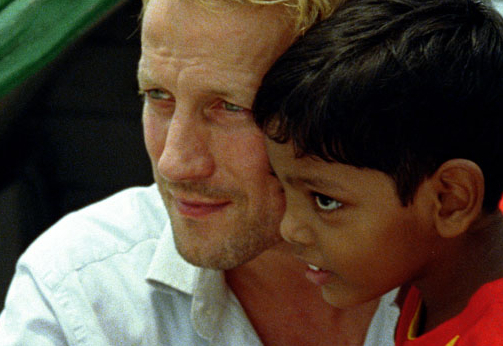
THE PLOT: An eye-opening take on international adoption, the title character of "Raju" is a 4-year-old Indian boy who is adopted by German parents but soon thereafter goes missing. While the mother grieves and worries in her hotel room, the father embarks on a panicked search, leading him to a shocking discovery.
WHAT I LIKED: Wotan Wilke Mohring is fantastic as Jan Fischer, the German man who adopts Raju. With his rugged handsomeness and deeply convincing, emotional performance, Mohring is deserving of more feature film work. (I discovered that he appeared in the film "Valkyrie" and has other feature credits.) Also, the plot twist is genuinely shocking and complex and elevates the film's conflict.
WHAT I DISLIKED: Again, the ending. It's not cheap, like the ending to "Pentecost," but its open-endedness feels like a different tone from what came before it. I'm okay with (and often enjoy) vague endings, but after such an emotional viewing experience, I wanted a little more.
3. "The Shore"
STATS: From Northern Ireland, 31 minutes
THE PLOT: Because "The Shore" was directed by Terry George, the same man who wrote "In the Name of the Father" and directed "Hotel Rwanda," it's probably the front-runner to win the Oscar. It's the story of a man named Joe (Ciaran Hinds) whose daughter Patricia (Kerry Condon) nudges him to visit with his childhood best friend, Paddy (Conleth Hill) in hopes of reconciling a 25-year-long falling out between them.
WHAT I LIKED: The wide-angled cinematography of the bay area in Killough, Northern Ireland is beautifully captured. Also, the film's honest performances and down-home Irish charm are hard to resist.
WHAT I DISLIKED: I had no strong dislikes of any element of "The Shore," but no overwhelming feelings of passion for it, either. It's dramedy by the numbers, effectively so.
4. "Time Freak"
STATS: From U.S.A., 11 minutes
THE PLOT: An inventor invents a time machine but is neurotically short-sighted in his use of it. Instead of using it to explore major events in history, he's focused on producing a better reaction at the dry cleaner's, where he lost his cool the day before.
WHAT I LIKED: There were a number of funny moments in "Time Freak," if not any gut-busting ones. Plus, it's kind of cool to see a little short like this receiving Academy recognition.
WHAT I DISLIKED: While sharp and witty, this one really feels like a college kid's film school project. It's more of an editing exercise than anything else.
5. "Tuba Atlantic"
STATS: From Norway, 25 minutes
THE PLOT: An old man named Oskar (Edvard Haegstad) receives a somber diagnosis; he has six days to live. Refusing to die in a hospital, he is soon greeted by a girl who claims to be an angel of death sent to help him die. But instead of focusing on his quickly-nearing mortality, Oskar is obsessed with killing seagulls. There's also a key plot point involving Oskar's attempt to contact his brother in New Jersey by using a giant, self-constructed tuba. (You have to watch it...) But it's been 30 years since they last spoke.
WHAT I LIKED: This one is strangely funny in a very quirky and original way. The episodes involving Oskar rigging new ways to kill seagulls give the film most of its most entertaining moments. And the opening visual (pictured at right) is a fantastic Gestalt trick.
WHAT I DISLIKED: While I admired bits and pieces of "Tuba Atlantic," I found the film on the whole to be disjointed and inaccessibly quirky. In other words, too weird for my tastes, though its weirdness was frequently entertaining.
My ranking of this year's nominees:
1. "Raju"
2. "The Shore"
3. "Pentecost"
4. "Tuba Atlantic"
5. "Time Freak"
My Oscar prediction: "The Shore." I wish I could pick "Raju," and I do think it has a shot, but Terry George has been nominated twice for an Oscar before and his film is the longest in running time here.
This year, I gladly paid $6.99, less than the cost of a movie ticket at the theatre, for my own copy of all five of the films nominated for the Live Action Short Oscar. Collectively, they play as one video file timing out at an hour and a half. Here's what I thought of them:
1. "Pentecost"
THE PLOT: "Pentecost" is a hilarious little trifle of a film in which a young altar boy has a memorable mishap dispensing insence during an Irish Catholic mass and is banned from not only his duties but from watching his beloved football (soccer) team play in the championships. But when the Archbishop comes to their small church to say mass, the boy is called up to get a second shot at his duties.
WHAT I LIKED: In a hilarious pre-mass scene, the altar boys dress for the service in what reminds you of an athletic locker room and then are given a pep talk as if preparing for a soccer match instead of a mass.
WHAT I DISLIKED: The ending is cheap and goes for the absurd/extreme instead of realism. It's equally shocking and expected, and it's definitely unnecessary.
2. "Raju"
THE PLOT: An eye-opening take on international adoption, the title character of "Raju" is a 4-year-old Indian boy who is adopted by German parents but soon thereafter goes missing. While the mother grieves and worries in her hotel room, the father embarks on a panicked search, leading him to a shocking discovery.
WHAT I LIKED: Wotan Wilke Mohring is fantastic as Jan Fischer, the German man who adopts Raju. With his rugged handsomeness and deeply convincing, emotional performance, Mohring is deserving of more feature film work. (I discovered that he appeared in the film "Valkyrie" and has other feature credits.) Also, the plot twist is genuinely shocking and complex and elevates the film's conflict.
WHAT I DISLIKED: Again, the ending. It's not cheap, like the ending to "Pentecost," but its open-endedness feels like a different tone from what came before it. I'm okay with (and often enjoy) vague endings, but after such an emotional viewing experience, I wanted a little more.
3. "The Shore"
THE PLOT: Because "The Shore" was directed by Terry George, the same man who wrote "In the Name of the Father" and directed "Hotel Rwanda," it's probably the front-runner to win the Oscar. It's the story of a man named Joe (Ciaran Hinds) whose daughter Patricia (Kerry Condon) nudges him to visit with his childhood best friend, Paddy (Conleth Hill) in hopes of reconciling a 25-year-long falling out between them.
WHAT I LIKED: The wide-angled cinematography of the bay area in Killough, Northern Ireland is beautifully captured. Also, the film's honest performances and down-home Irish charm are hard to resist.
WHAT I DISLIKED: I had no strong dislikes of any element of "The Shore," but no overwhelming feelings of passion for it, either. It's dramedy by the numbers, effectively so.
4. "Time Freak"
THE PLOT: An inventor invents a time machine but is neurotically short-sighted in his use of it. Instead of using it to explore major events in history, he's focused on producing a better reaction at the dry cleaner's, where he lost his cool the day before.
WHAT I LIKED: There were a number of funny moments in "Time Freak," if not any gut-busting ones. Plus, it's kind of cool to see a little short like this receiving Academy recognition.
WHAT I DISLIKED: While sharp and witty, this one really feels like a college kid's film school project. It's more of an editing exercise than anything else.
5. "Tuba Atlantic"
THE PLOT: An old man named Oskar (Edvard Haegstad) receives a somber diagnosis; he has six days to live. Refusing to die in a hospital, he is soon greeted by a girl who claims to be an angel of death sent to help him die. But instead of focusing on his quickly-nearing mortality, Oskar is obsessed with killing seagulls. There's also a key plot point involving Oskar's attempt to contact his brother in New Jersey by using a giant, self-constructed tuba. (You have to watch it...) But it's been 30 years since they last spoke.
WHAT I LIKED: This one is strangely funny in a very quirky and original way. The episodes involving Oskar rigging new ways to kill seagulls give the film most of its most entertaining moments. And the opening visual (pictured at right) is a fantastic Gestalt trick.
WHAT I DISLIKED: While I admired bits and pieces of "Tuba Atlantic," I found the film on the whole to be disjointed and inaccessibly quirky. In other words, too weird for my tastes, though its weirdness was frequently entertaining.
My ranking of this year's nominees:
1. "Raju"
2. "The Shore"
3. "Pentecost"
4. "Tuba Atlantic"
5. "Time Freak"
My Oscar prediction: "The Shore." I wish I could pick "Raju," and I do think it has a shot, but Terry George has been nominated twice for an Oscar before and his film is the longest in running time here.
War Horse (2011)
Of this year's bloated list of nine Best Picture nominees, it took me the longest to bring myself to watch "War Horse," largely due to its reputation as "the kind of movie that used to win Oscars," in addition to it's two-and-a-half-hour running time and all that I've read about John Williams' overbearing score. And there's a part of me that feels sad about slighting a new Spielberg film, something serious movie-goers should always have a right to look forward to.
Indeed, "War Horse" displays the best of what Spielberg films are capable of. The World War I battle sequences in the European countrysides are every bit as deft and meticulously recreated as those in previous Spielberg war films. One gets the sense that the man could reenact any battle from any war at this point and make you forget that it isn't live footage from the scene itself. And the film's powerful emotional core is as affecting as the best of any of Speilberg's family-oriented pictures.
I suspect that for some, "War Horse" plays like a "Spielberg's greatest hits" movie, and I can understand being critical of Spielberg for making a film that is altogether within his wheelhouse in a year when one of his few contemporaries, Martin Scorsese, experimented with a new genre to him (the children's film) and a never-before-used format (3-D). Throw in a little-known French director's silent, black-and-white film and Terrence Malick's format-busting visual poetry, and it's hard not to feel like Spielberg was just going through the motions when he made this film.
It would be tempting to feel that way, and I did laugh to myself when reading Claudia Puig's review of "War Horse" in USA Today, where she wrote that "at times, it's hard not to escape the sense that we're watching 'Saving Private Ryan'-meets-'The Black Stallion.'" I get that.
But what I also got from "War Horse" was a director paying loving tribute to one of his idols, John Ford. I saw a lot of "The Searchers" in the saturated blue skies of the film's opening half-hour, and a blue-tinted, background-lit scene toward the end of the film when a soldier attempts to rescue the horse from some barbed wire has a look similar to the scene in "The Searchers" when Ethan Edwards and his party are slowly moving through a swamp area on the trail of his family's Comanche killers.
Spielberg and his cinematographer, the venerable Janusz Kaminski, deliver a film of stunning visual power. Were it not for "The Tree of Life," I'd say this was the best cinematography of the year. Frequently dominated by operatic long shots, "War Horse" looks majestic.
By now, I've usually recapped the plot, but for a movie that is among the longest nominated this year, the plot is as simple as one would expect from a children's story. A country boy named Albert (Jeremy Irvine) falls in love with a horse his father has payed too much for. His mother (the great Emily Watson, who I wish the film could have used more of), is furious; the horse cannot be tamed and is of no help to the family's crop-tending. But Albert trains him.
As the first World War makes its way across the English countryside, the British Cavalry purchase the horse (named Joey) for use in the war. The soldier who takes him away from Albert promises to take good care of Joey and return him if possible after the war, and because we know Spielberg's films, we know two things: 1) returning the horse will be damn near impossible, and 2) the horse will be reunited with his owner by the end.
Along the way, Joey's bridle is in the hands of a variety of owners, most of them soldiers, but not all of them. In fact, one of the film's most moving sub-plots involves a young girl who comes into possession of Joey for a time, and the grandfather who cares for her.
The actors, while all effective, are very clearly secondary in this film, and Spielberg unashamedly makes the horse the film's main character. For some, this could be a problem. But Spielberg has done this before. Think "ET" and "A.I.: Artificial Intelligence." He knows what he's doing.
I knew going in to "War Horse" that it was thought to be the work of a coasting director. I knew that the sentimentality of the film, based on a Tony Award-winning play, would be amped-up to 11 on the make-you-cry scale. I feel like I knew every bad thing about this movie before I saw it.
But why, then, was I so moved by "War Horse"? Why was I more emotional over this film than when watching "Extremely Loud & Incredibly Close"? Why is it that I began the film in a jaded mindset and left it with a completely different point of view? I can only surmise that the film was effective. That's a simple answer, but it runs deep. If the measure of a good movie is how well it accomplishes what it sets out to accomplish, then "War Horse" is a good movie. And if Spielberg is just retreading themes and visuals that he's done to death already, then what makes him that different from someone like Hitchcock, who constantly explored similar themes within the same genre (and brilliantly so) for his entire career?
The final 40 minutes of "War Horse" is some of the most affecting film making I've seen all year. Yes, it's exactly what anyone would expect from Spielberg. No, it's not groundbreaking or original in any way. But dammit, that closing shot with the actors silhouetted against a John Ford-inspired, burnt orange sky... It just works.
3.5 out of 4
Thursday, February 16, 2012
Hell and Back Again (2011)
There's a strong connection between this scene and "Hell and Back Again," a documentary directed by Danfung Dennis and nominated this year for the Documentary Feature Academy Award. Anyone who is looking to somehow comprehend what life is like for a soldier who is fortunate enough to return home after combat should see this film, though it is not the strongest movie in a recent hearty batch of Iraq and Afghanistan-focused war films which include the far superior "The Hurt Locker" and last year's amazing documentary "Restrepo."
"Hell and Back Again" introduces us to Sgt. Nathan Harris, a Marine injured in Afghanistan. The film toggles between his days in a leadership war in that war-torn country and the early days he spends adjusting to his return home. His return to North Carolina is compromised by a shattered hip and a leg injury, and Harris struggles to grasp the concept of relying on a walker, not to mention that walking causes him great pain.
But what's more revealing is Harris' inability to get comfortable with his return to his home and his wife. The film shows him casually - even somewhat recklessly - playing with guns while sitting in a room with his family and friends. We see him gripping his head in the passenger seat of a car on numerous occasions, as the sounds of suburban streets intersect in his head with those of helicopter blades and mortar fire. His every conversation is dominated by thoughts of war; he'll casually show off the scar that crosses his buttocks or say enough about himself to receive a sincere thank you or hug from the town locals for his service to our country.
Dennis makes Harris the sole focus of the film and moves between his time and combat and his time at home. Once in a while, these juxtapositions reach artistic levels, but I was left wanting to see that happen more frequently. In addition, Harris' somewhat doofus demeanor and scarred behavior renders him slightly unlikable and/or unapproachable, which is a strike against any film, fiction or non-fiction. I always sympathized with Harris and I'd like to think that I came to understand him. God knows I respect him and am grateful for his sacrifice. I just wish I could like him a bit more.
The wartime footage captured by Dennis, embedded in Afghanistan as a photojournalist at the time, is as intense as it should be, visceral. And the inclusion of this footage helps us understand why and how civilian life is such a boring change of pace for soldiers like Harris. But I'm wondering if the film might have been a stronger one if Harris was not its sole focus. I could easily make a case either way, and it could be said that Dennis' focus on one Marine allows for a depth of coverage that permits us to transfer one's man's experience onto those of any who've served in combat. But is that even fair? I don't feel like I have a right to speculate; I've never been in combat.
I found "Hell and Back Again" to be a worthwhile viewing but more like a TV news special with profanity than an artistically-assembled documentary film. I think it covers a topic that all of us should be made better aware of. But I also think that there are other films on the subject that have done so with a little more depth and flash.
2.5 out of 4
Extremely Loud & Incredibly Close
Are films about Sept. 11, 2001 still taboo? That seems to be the thinking of some of the harshest critics of "Extremely Loud & Incredibly Close," an unfairly maligned film nominated for the Best Picture Oscar (perhaps thanks to the campaigning success of producer Scott Rudin).
"Extremely Loud..." is one of those pedigree projects that's intended to be Oscar bait, and we know now that with only two nominations and a slew of mediocre reviews, it's fallen short of that goal. Adapted from Jonathan Safron Foer's excellent 2005 novel by one of Hollywood's premiere adapters, Eric Roth ("Forrest Gump," "The Curious Case of Benjamin Button"), the film is loaded with star power and built-in emotional anguish. And regardless of its inability to live up to its lofty hype, it is still a good movie.
The story centers around a young boy named Oskar Schell (Thomas Horn) who, a year after his father dies in the attacks on the World Trade Center, finds the strength to go into his father's closet for the first time since his death and look around. His father (played sincerely by Tom Hanks) would always set up elaborate intellectual adventures for the borderline-autistic Oskar, and had even come close to convincing the boy that there was once a sixth borough in New York. The need to prove this as fact had become a bit of an obsession for Oskar.
While in his father's closet, Oskar performs a blind hand sweep of a high shelf and accidentally knocks a blue vase to the ground, which shatters to reveal a small envelope labeled "Black" which contains a single key. Convinced that the key is a clue in another of his dad's "expeditions," Oskar sets out to find its owner, devising a complex system for locating and visiting all residents of the known five boroughs with the last name of Black.
We know, of course, that Oskar's mission is an all but hopeless one, but as they say, it's the journey, not the destination. And so Oskar meets everyone from a woman about to become a divorcee (the sublime Viola Davis) to a deeply religious woman who prays for Oskar that he will get his answers. Along the way, Oskar disobeys his grandmother by fraternizing with a mysterious man renting one of his grandmother's apartments. The man (played by Oscar-nominated film legend Max Von Sydow) is mute, perhaps voluntarily as a result of a personal tragedy from his own youth. This man, known only as "the Renter," begins to accompany Oskar on his travels for reasons unbeknownst to the audience, at least at first.
"Extremely Loud & Incredibly Close" is director Stephen Daldry's fourth feature film and will probably be seen as his weakest to date if for no other reason than the fact that he received Best Picture and/or Best Director nominations for all three of his previous films: "Billy Elliot," "The Hours" and "The Reader." Receiving a nomination for Picture but not Director, then, is the same kind of disappointment as when Michael Jackson sold only eight million copies of "Bad" after the success of "Thriller." But his work here is, frankly, on par in many ways with each of his previous and also excellent films.
Daldry continues to grow as an artist, symbolically alternating here between intimate close-ups and claustrophobic, tightly-framed moments with the vast expanses illustrated by extreme long shots of New York City. In so doing, he gives us the means to connect with the film on an intensely emotional level and shows us how Oskar is wont to zoom in on the little details of life, while conversely demonstrating the magnitude of the task Oksar sets before himself, the ironic hopelessness and hugeness of it.
Thomas Horn is excellent as Oskar. I've read some reviews that say that he was an annoying kid and hard to sympathize with. I disagree completely. His behavior is carefully guided by Daldry's direction to not only make us feel compassion for the boy but to also grow in our love for Oskar's father, Thomas, and our sadness over the loss of a man who knew what to do to engage a brain as unusual as his son's. Keep in mind that Daldry has already finessed amazing work out of young actors in "Billy Elliot" and "The Reader"; I'd say he's developing something of a reputation as a go-to guy for working with child actors.
The support cast in "Extremely Loud..." is fantastic, particularly the work of Sandra Bullock as Oskar's mother and Jeffrey Wright as the ex-husband of Viola Davis' character. But the eye and soul-catching work goes to Von Sydow, and now I can understand why he was nominated for an Academy Award. In a year when silent film work is receiving so much attention - thanks to "The Artist" - here we have a completely silent performance (unlike "The Artist," by the way) that speaks volumes. Slightly hunched over and dressed in black, Von Sydow's mysterious character is red around the eyes and slouching. His presence in the apartment he's renting and Oskar's grandmother's warnings to leave him alone are juicy plot mysteries for the audience to solve, but the film draws up few questions larger than exactly why the Renter has any interest in Oskar's expedition.
In the performances of Horn and Von Sydow, the film constructs a fascinating juxtaposition; both the old man and the boy are mired in family tragedy and one copes by no longer speaking while the other copes by speaking a great deal. The fact that their pain feels so shared gives the film as much of its emotional punch as the handiness of a Sept. 11 plot to extract tears.
I'm not sure if it's because I had already read the novel, but one thing that surprised me about watching "Extremely Loud & Incredibly Close" is the fact that I never did get emotionally overwhelmed. I expected to. Maybe I even hoped to. But while I was genuinely moved, I was never overwhelmed, and it's too soon as I write this to put my finger on exactly why that is the case. Indeed, I was missing some of the imagination and depth of Foer's writing voice in the translation from page to screen, but Roth and Daldry try hard to include much of it, and since I read the novel when it was first released, enough time had gone by that I'd forgotten many of the plot's smaller details.
There's definitely a "Forrest Gump" quality to "Extremely Loud...," and I suspect that this irony-free, overly-sincere approach to a still-tender subject will turn some viewers off; they'll consider the film treacly and the emotion forced. But while I wasn't fully overwhelmed here, I was deeply invested in a quality film. It's not the year's best and it's probably not Daldry's best, either, but it's a beautiful, touching movie.
3.0 out of 4
Subscribe to:
Posts (Atom)