Saturday, February 25, 2012

The Oscar-nominated Live Action Shorts (2011)

Thank you, iTunes! Whereas in the past one would have to miss viewing any of the Oscar-nominated short films and take a wild guess at predicting a winner, often based on the title alone, we can now download many of the nominated short films and make our own decisions. For years, I have scoured the Internet to catch at least the trailers of these little gems, if I wasn't lucky enough to find a pirated version of an entire short film on a website somewhere.

This year, I gladly paid $6.99, less than the cost of a movie ticket at the theatre, for my own copy of all five of the films nominated for the Live Action Short Oscar. Collectively, they play as one video file timing out at an hour and a half. Here's what I thought of them:

1. "Pentecost"
STATS: From Ireland, 11 minutes
THE PLOT: "Pentecost" is a hilarious little trifle of a film in which a young altar boy has a memorable mishap dispensing insence during an Irish Catholic mass and is banned from not only his duties but from watching his beloved football (soccer) team play in the championships. But when the Archbishop comes to their small church to say mass, the boy is called up to get a second shot at his duties.
WHAT I LIKED: In a hilarious pre-mass scene, the altar boys dress for the service in what reminds you of an athletic locker room and then are given a pep talk as if preparing for a soccer match instead of a mass.
WHAT I DISLIKED: The ending is cheap and goes for the absurd/extreme instead of realism. It's equally shocking and expected, and it's definitely unnecessary.

2. "Raju"
STATS: From Germany/India, 24 minutes
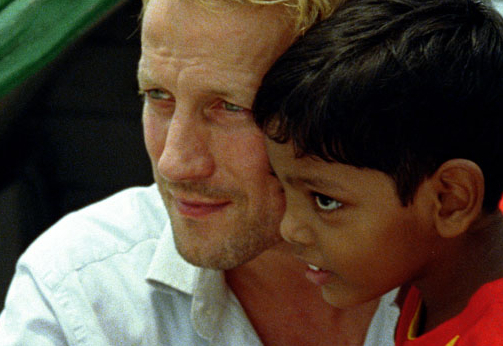
THE PLOT: An eye-opening take on international adoption, the title character of "Raju" is a 4-year-old Indian boy who is adopted by German parents but soon thereafter goes missing. While the mother grieves and worries in her hotel room, the father embarks on a panicked search, leading him to a shocking discovery.
WHAT I LIKED: Wotan Wilke Mohring is fantastic as Jan Fischer, the German man who adopts Raju. With his rugged handsomeness and deeply convincing, emotional performance, Mohring is deserving of more feature film work. (I discovered that he appeared in the film "Valkyrie" and has other feature credits.) Also, the plot twist is genuinely shocking and complex and elevates the film's conflict.
WHAT I DISLIKED: Again, the ending. It's not cheap, like the ending to "Pentecost," but its open-endedness feels like a different tone from what came before it. I'm okay with (and often enjoy) vague endings, but after such an emotional viewing experience, I wanted a little more.

3. "The Shore"
STATS: From Northern Ireland, 31 minutes
THE PLOT: Because "The Shore" was directed by Terry George, the same man who wrote "In the Name of the Father" and directed "Hotel Rwanda," it's probably the front-runner to win the Oscar. It's the story of a man named Joe (Ciaran Hinds) whose daughter Patricia (Kerry Condon) nudges him to visit with his childhood best friend, Paddy (Conleth Hill) in hopes of reconciling a 25-year-long falling out between them.
WHAT I LIKED: The wide-angled cinematography of the bay area in Killough, Northern Ireland is beautifully captured. Also, the film's honest performances and down-home Irish charm are hard to resist.
WHAT I DISLIKED: I had no strong dislikes of any element of "The Shore," but no overwhelming feelings of passion for it, either. It's dramedy by the numbers, effectively so.

4. "Time Freak"
STATS: From U.S.A., 11 minutes
THE PLOT: An inventor invents a time machine but is neurotically short-sighted in his use of it. Instead of using it to explore major events in history, he's focused on producing a better reaction at the dry cleaner's, where he lost his cool the day before.
WHAT I LIKED: There were a number of funny moments in "Time Freak," if not any gut-busting ones. Plus, it's kind of cool to see a little short like this receiving Academy recognition.
WHAT I DISLIKED: While sharp and witty, this one really feels like a college kid's film school project. It's more of an editing exercise than anything else.

5. "Tuba Atlantic"
STATS: From Norway, 25 minutes
THE PLOT: An old man named Oskar (Edvard Haegstad) receives a somber diagnosis; he has six days to live. Refusing to die in a hospital, he is soon greeted by a girl who claims to be an angel of death sent to help him die. But instead of focusing on his quickly-nearing mortality, Oskar is obsessed with killing seagulls. There's also a key plot point involving Oskar's attempt to contact his brother in New Jersey by using a giant, self-constructed tuba. (You have to watch it...) But it's been 30 years since they last spoke.
WHAT I LIKED: This one is strangely funny in a very quirky and original way. The episodes involving Oskar rigging new ways to kill seagulls give the film most of its most entertaining moments. And the opening visual (pictured at right) is a fantastic Gestalt trick.
WHAT I DISLIKED: While I admired bits and pieces of "Tuba Atlantic," I found the film on the whole to be disjointed and inaccessibly quirky. In other words, too weird for my tastes, though its weirdness was frequently entertaining.

My ranking of this year's nominees:
1. "Raju"
2. "The Shore"
3. "Pentecost"
4. "Tuba Atlantic"
5. "Time Freak"

My Oscar prediction: "The Shore." I wish I could pick "Raju," and I do think it has a shot, but Terry George has been nominated twice for an Oscar before and his film is the longest in running time here.


War Horse (2011)

Of this year's bloated list of nine Best Picture nominees, it took me the longest to bring myself to watch "War Horse," largely due to its reputation as "the kind of movie that used to win Oscars," in addition to it's two-and-a-half-hour running time and all that I've read about John Williams' overbearing score. And there's a part of me that feels sad about slighting a new Spielberg film, something serious movie-goers should always have a right to look forward to.

Indeed, "War Horse" displays the best of what Spielberg films are capable of. The World War I battle sequences in the European countrysides are every bit as deft and meticulously recreated as those in previous Spielberg war films. One gets the sense that the man could reenact any battle from any war at this point and make you forget that it isn't live footage from the scene itself. And the film's powerful emotional core is as affecting as the best of any of Speilberg's family-oriented pictures.

I suspect that for some, "War Horse" plays like a "Spielberg's greatest hits" movie, and I can understand being critical of Spielberg for making a film that is altogether within his wheelhouse in a year when one of his few contemporaries, Martin Scorsese, experimented with a new genre to him (the children's film) and a never-before-used format (3-D). Throw in a little-known French director's silent, black-and-white film and Terrence Malick's format-busting visual poetry, and it's hard not to feel like Spielberg was just going through the motions when he made this film.

It would be tempting to feel that way, and I did laugh to myself when reading Claudia Puig's review of "War Horse" in USA Today, where she wrote that "at times, it's hard not to escape the sense that we're watching 'Saving Private Ryan'-meets-'The Black Stallion.'" I get that.

But what I also got from "War Horse" was a director paying loving tribute to one of his idols, John Ford. I saw a lot of "The Searchers" in the saturated blue skies of the film's opening half-hour, and a blue-tinted, background-lit scene toward the end of the film when a soldier attempts to rescue the horse from some barbed wire has a look similar to the scene in "The Searchers" when Ethan Edwards and his party are slowly moving through a swamp area on the trail of his family's Comanche killers.

Spielberg and his cinematographer, the venerable Janusz Kaminski, deliver a film of stunning visual power. Were it not for "The Tree of Life," I'd say this was the best cinematography of the year. Frequently dominated by operatic long shots, "War Horse" looks majestic.

By now, I've usually recapped the plot, but for a movie that is among the longest nominated this year, the plot is as simple as one would expect from a children's story. A country boy named Albert (Jeremy Irvine) falls in love with a horse his father has payed too much for. His mother (the great Emily Watson, who I wish the film could have used more of), is furious; the horse cannot be tamed and is of no help to the family's crop-tending. But Albert trains him.

As the first World War makes its way across the English countryside, the British Cavalry purchase the horse (named Joey) for use in the war. The soldier who takes him away from Albert promises to take good care of Joey and return him if possible after the war, and because we know Spielberg's films, we know two things: 1) returning the horse will be damn near impossible, and 2) the horse will be reunited with his owner by the end.

Along the way, Joey's bridle is in the hands of a variety of owners, most of them soldiers, but not all of them. In fact, one of the film's most moving sub-plots involves a young girl who comes into possession of Joey for a time, and the grandfather who cares for her.

The actors, while all effective, are very clearly secondary in this film, and Spielberg unashamedly makes the horse the film's main character. For some, this could be a problem. But Spielberg has done this before. Think "ET" and "A.I.: Artificial Intelligence." He knows what he's doing.

I knew going in to "War Horse" that it was thought to be the work of a coasting director. I knew that the sentimentality of the film, based on a Tony Award-winning play, would be amped-up to 11 on the make-you-cry scale. I feel like I knew every bad thing about this movie before I saw it.

But why, then, was I so moved by "War Horse"? Why was I more emotional over this film than when watching "Extremely Loud & Incredibly Close"? Why is it that I began the film in a jaded mindset and left it with a completely different point of view? I can only surmise that the film was effective. That's a simple answer, but it runs deep. If the measure of a good movie is how well it accomplishes what it sets out to accomplish, then "War Horse" is a good movie. And if Spielberg is just retreading themes and visuals that he's done to death already, then what makes him that different from someone like Hitchcock, who constantly explored similar themes within the same genre (and brilliantly so) for his entire career?

The final 40 minutes of "War Horse" is some of the most affecting film making I've seen all year. Yes, it's exactly what anyone would expect from Spielberg. No, it's not groundbreaking or original in any way. But dammit, that closing shot with the actors silhouetted against a John Ford-inspired, burnt orange sky... It just works.

3.5 out of 4

Thursday, February 16, 2012

Hell and Back Again (2011)

There's a mind-blowing moment at the end of Kathryn Bigelow's Oscar-winner "The Hurt Locker" in which a soldier who has just returned from the horrors of war finds himself standing in an aisle of a grocery store looking completely stunned and incapable of functioning in that space; he doesn't know how to make a decision and he seems to have forgotten what brought him there in the first place. The moment is a powerful and symbolic glimpse into the psyche of a soldier who's seen combat has become another person because of it, a person who has made war his home and can't seem to function in his real, civilian home.

There's a strong connection between this scene and "Hell and Back Again," a documentary directed by Danfung Dennis and nominated this year for the Documentary Feature Academy Award. Anyone who is looking to somehow comprehend what life is like for a soldier who is fortunate enough to return home after combat should see this film, though it is not the strongest movie in a recent hearty batch of Iraq and Afghanistan-focused war films which include the far superior "The Hurt Locker" and last year's amazing documentary "Restrepo."

"Hell and Back Again" introduces us to Sgt. Nathan Harris, a Marine injured in Afghanistan. The film toggles between his days in a leadership war in that war-torn country and the early days he spends adjusting to his return home. His return to North Carolina is compromised by a shattered hip and a leg injury, and Harris struggles to grasp the concept of relying on a walker, not to mention that walking causes him great pain.

But what's more revealing is Harris' inability to get comfortable with his return to his home and his wife. The film shows him casually - even somewhat recklessly - playing with guns while sitting in a room with his family and friends. We see him gripping his head in the passenger seat of a car on numerous occasions, as the sounds of suburban streets intersect in his head with those of helicopter blades and mortar fire. His every conversation is dominated by thoughts of war; he'll casually show off the scar that crosses his buttocks or say enough about himself to receive a sincere thank you or hug from the town locals for his service to our country.

Dennis makes Harris the sole focus of the film and moves between his time and combat and his time at home. Once in a while, these juxtapositions reach artistic levels, but I was left wanting to see that happen more frequently. In addition, Harris' somewhat doofus demeanor and scarred behavior renders him slightly unlikable and/or unapproachable, which is a strike against any film, fiction or non-fiction. I always sympathized with Harris and I'd like to think that I came to understand him. God knows I respect him and am grateful for his sacrifice. I just wish I could like him a bit more.

The wartime footage captured by Dennis, embedded in Afghanistan as a photojournalist at the time, is as intense as it should be, visceral. And the inclusion of this footage helps us understand why and how civilian life is such a boring change of pace for soldiers like Harris. But I'm wondering if the film might have been a stronger one if Harris was not its sole focus. I could easily make a case either way, and it could be said that Dennis' focus on one Marine allows for a depth of coverage that permits us to transfer one's man's experience onto those of any who've served in combat. But is that even fair? I don't feel like I have a right to speculate; I've never been in combat.

I found "Hell and Back Again" to be a worthwhile viewing but more like a TV news special with profanity than an artistically-assembled documentary film. I think it covers a topic that all of us should be made better aware of. But I also think that there are other films on the subject that have done so with a little more depth and flash.

2.5 out of 4

Extremely Loud & Incredibly Close

Are films about Sept. 11, 2001 still taboo? That seems to be the thinking of some of the harshest critics of "Extremely Loud & Incredibly Close," an unfairly maligned film nominated for the Best Picture Oscar (perhaps thanks to the campaigning success of producer Scott Rudin).

"Extremely Loud..." is one of those pedigree projects that's intended to be Oscar bait, and we know now that with only two nominations and a slew of mediocre reviews, it's fallen short of that goal. Adapted from Jonathan Safron Foer's excellent 2005 novel by one of Hollywood's premiere adapters, Eric Roth ("Forrest Gump," "The Curious Case of Benjamin Button"), the film is loaded with star power and built-in emotional anguish. And regardless of its inability to live up to its lofty hype, it is still a good movie.

The story centers around a young boy named Oskar Schell (Thomas Horn) who, a year after his father dies in the attacks on the World Trade Center, finds the strength to go into his father's closet for the first time since his death and look around. His father (played sincerely by Tom Hanks) would always set up elaborate intellectual adventures for the borderline-autistic Oskar, and had even come close to convincing the boy that there was once a sixth borough in New York. The need to prove this as fact had become a bit of an obsession for Oskar.

While in his father's closet, Oskar performs a blind hand sweep of a high shelf and accidentally knocks a blue vase to the ground, which shatters to reveal a small envelope labeled "Black" which contains a single key. Convinced that the key is a clue in another of his dad's "expeditions," Oskar sets out to find its owner, devising a complex system for locating and visiting all residents of the known five boroughs with the last name of Black.

We know, of course, that Oskar's mission is an all but hopeless one, but as they say, it's the journey, not the destination. And so Oskar meets everyone from a woman about to become a divorcee (the sublime Viola Davis) to a deeply religious woman who prays for Oskar that he will get his answers. Along the way, Oskar disobeys his grandmother by fraternizing with a mysterious man renting one of his grandmother's apartments. The man (played by Oscar-nominated film legend Max Von Sydow) is mute, perhaps voluntarily as a result of a personal tragedy from his own youth. This man, known only as "the Renter," begins to accompany Oskar on his travels for reasons unbeknownst to the audience, at least at first.

"Extremely Loud & Incredibly Close" is director Stephen Daldry's fourth feature film and will probably be seen as his weakest to date if for no other reason than the fact that he received Best Picture and/or Best Director nominations for all three of his previous films: "Billy Elliot," "The Hours" and "The Reader." Receiving a nomination for Picture but not Director, then, is the same kind of disappointment as when Michael Jackson sold only eight million copies of "Bad" after the success of "Thriller." But his work here is, frankly, on par in many ways with each of his previous and also excellent films.

Daldry continues to grow as an artist, symbolically alternating here between intimate close-ups and claustrophobic, tightly-framed moments with the vast expanses illustrated by extreme long shots of New York City. In so doing, he gives us the means to connect with the film on an intensely emotional level and shows us how Oskar is wont to zoom in on the little details of life, while conversely demonstrating the magnitude of the task Oksar sets before himself, the ironic hopelessness and hugeness of it.

Thomas Horn is excellent as Oskar. I've read some reviews that say that he was an annoying kid and hard to sympathize with. I disagree completely. His behavior is carefully guided by Daldry's direction to not only make us feel compassion for the boy but to also grow in our love for Oskar's father, Thomas, and our sadness over the loss of a man who knew what to do to engage a brain as unusual as his son's. Keep in mind that Daldry has already finessed amazing work out of young actors in "Billy Elliot" and "The Reader"; I'd say he's developing something of a reputation as a go-to guy for working with child actors.

The support cast in "Extremely Loud..." is fantastic, particularly the work of Sandra Bullock as Oskar's mother and Jeffrey Wright as the ex-husband of Viola Davis' character. But the eye and soul-catching work goes to Von Sydow, and now I can understand why he was nominated for an Academy Award. In a year when silent film work is receiving so much attention - thanks to "The Artist" - here we have a completely silent performance (unlike "The Artist," by the way) that speaks volumes. Slightly hunched over and dressed in black, Von Sydow's mysterious character is red around the eyes and slouching. His presence in the apartment he's renting and Oskar's grandmother's warnings to leave him alone are juicy plot mysteries for the audience to solve, but the film draws up few questions larger than exactly why the Renter has any interest in Oskar's expedition.

In the performances of Horn and Von Sydow, the film constructs a fascinating juxtaposition; both the old man and the boy are mired in family tragedy and one copes by no longer speaking while the other copes by speaking a great deal. The fact that their pain feels so shared gives the film as much of its emotional punch as the handiness of a Sept. 11 plot to extract tears.

I'm not sure if it's because I had already read the novel, but one thing that surprised me about watching "Extremely Loud & Incredibly Close" is the fact that I never did get emotionally overwhelmed. I expected to. Maybe I even hoped to. But while I was genuinely moved, I was never overwhelmed, and it's too soon as I write this to put my finger on exactly why that is the case. Indeed, I was missing some of the imagination and depth of Foer's writing voice in the translation from page to screen, but Roth and Daldry try hard to include much of it, and since I read the novel when it was first released, enough time had gone by that I'd forgotten many of the plot's smaller details.

There's definitely a "Forrest Gump" quality to "Extremely Loud...," and I suspect that this irony-free, overly-sincere approach to a still-tender subject will turn some viewers off; they'll consider the film treacly and the emotion forced. But while I wasn't fully overwhelmed here, I was deeply invested in a quality film. It's not the year's best and it's probably not Daldry's best, either, but it's a beautiful, touching movie.

3.0 out of 4

Saturday, January 28, 2012

If a Tree Falls: A Story of the Earth Liberation Front (2011)

Do individuals who coordinated to destroy thousands of buildings and pieces of property nation-wide for the purpose of speaking out against perceived crimes against the environment deserve to be labeled as "terrorists"? This question is at the heart of the documentary "If a Tree Falls: A Story of the Earth Liberation Front," a surprisingly even-handed and journalistic look into the phenomenon known as "eco-terrorism."

The aforementioned question is one debated by Daniel McGowan, the film's main subject and a man awaiting two life sentences in prison for his involvement in arsons and descructions of property in the mid-1990s through the early 2000s, largely in the American northwest. The film, directed by Marshall Curry, is largely a look back through various key acts of protest by a group called the Earth Liberation Front, or ELF, how McGowan came to be involved with the ELF, and in what capacity McGowan was involved.

At no point does "If a Tree Falls" attempt to persuade its audience that McGowan is not guilty of his crimes. There is no mistaking that he is. Instead, Curry attempts to hook the audience into an ambiguous place by stimulating an intellectual debate as to whether or not should be considered "terrorism." McGowan and others argue that because not one person was killed in hundreds upon hundreds of the ELF's acts, the moniker of "terrorist" is incorrect and inapporopriate. They believe that a terrorist seeks to end human life.

The dissenting argument, led by the U.S. government, makes the case that a terrorist does not need to target human life and that a terrorist instills a state of fear in people, a perpetual insecurity, that the ELF has clearly achieved through its acts at the expense of logging companies, laboratories, and other businesses tied to environmental practices opposed by the ELF. According to one federal prosecutor, "You don't have to be Bonnie and Clyde to be a bank robber, and you don't have to be Al Quida to be a terrorist."

For a majority of the film, Curry is largely successful in maintaining a relative journalistic neutrality that keeps the focus on the debate and forces the viewer to consider how he or she feels about what has taken place. But the revelation of McCowan's eventual acceptance of a plea bargain to reduce his jail time to what would amount to seven years (he is now currently serving that sentence) is damaging to McCowan's character. The plea bargain is certainly understandable, but it wusses him out and any admiration one might have for McCowan seems to slip away.

If it hadn't already. Interviews in the second half of the film show McCowan increasingly questioning the decisions he's made, leading up to his active role as an arsonist in the destruction of a facility thought to have ties to the genetic cloning of trees for paper manufacturing that was carried out based on faulty information.

And then, of course, there's the issue of whether or not the destruction of property is a valid and acceptable practice when one wants to make a point or get something done. Logic would tell us it's not. But Curry also shows us that peaceful protesters acting on their First Amendment rights were systematically attacked in violent ways by law enforcement, pepper sprayed and even having their pants cut so that their genital areas could be sprayed with chemicals. Certainly, that's not right, either.

In the end, though, it's awfully difficult to have a lot of sympathy for McCowan as Curry tosses objectivity aside in the film's final 15 minutes to watch McCowan accept the plea bargain, lose the battle against the government to have the label of "terrorist" removed from him, and say goodbye to his family before heading off to prison. I'm still not certain whether or not I believe the term "terrorism" truly applies; it's certainly not as accurate as "arsonist," and McCowan and his former companions are most certainly criminals worthy of convictions and jail sentences.

There's an old saying that goes "if you don't stand for something, you'll fall for anything." What's sad about "If a Tree Falls" is that we see a man stand for something yet fall anyway.

2.5 out of 4

Paradise Lost 3: Purgatory (2011)

I don't normally watch a sequel without having seen the chapters of the story that come before them, but one of the things that makes "Paradise Lost 3: Purgatory" so good is the fact that having seen the two previous films in this documentary series is not necessary.

I have not seen 1996's "Paradise Lost: The Child Murders at Robin Hood Hills," nor its 2000 follow-up, "Paradise Lost 2: Revelations," but "Purgatory" quickly gets viewers up to speed with the back story of the West Memphis Three, a story that seems to be among the most compelling true crime stories of the past 50 years in the minds and imaginations of many Americans. I was, sadly, only peripherally aware of the details of the 1993 murders of three eight-year-old boys and the convictions of the three teens who are now considered to be innocent of those murders.

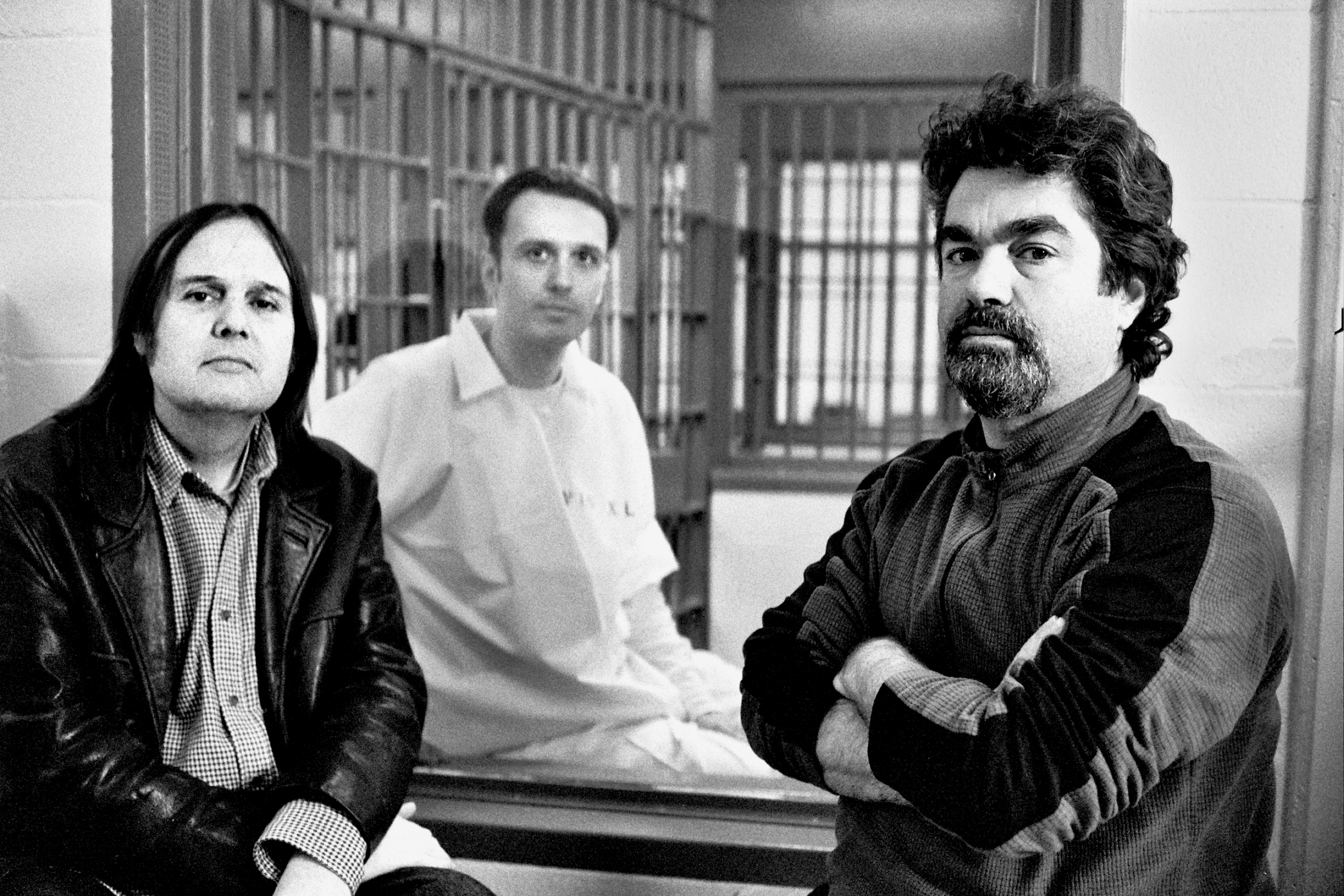
But the story is clearly compelling enough - and the sense of injustice by many was so strong - that filmmakers Joe Berlinger and Bruce Sinofsky (who have filmed everything from the Metallica documentary "Some Kind of Monster" to Oprah's current O Network program "Master Class") have apparently made keeping up with the story of the wrongfully-convicted Jason Baldwin, Damien Echols and Jessie Miskelly their cinematic life's mission.

Without having seen those previous films, I can only assume that the history Berlinger and Sinofsky have, not only with the details of this case but with the three men in jail themselves, is what allows "Paradise Lost 3: Purgatory" to be the compelling documentary that it is. This is not objective documentary filmmaking; its creators clearly believe that the three men were wrongfully committed of the killings. Nor does it go to Michael Moore-style extremes in impressing a version of what did happen on audiences (though it certainly offers up a potential suspect with more than a slight subtlety).

Like the two installments before it, this film is a part of HBO's documentary series. It showcases a decades-long persistence on the part of the filmmakers in tracing the journey of how Baldwin, Echols and Miskelly were arrested for the murders of three boys in Arkansas, railroaded into false confessions, and tried as practicing satanists, a tactic that is surprisingly convincing at times. Indeed, one of the things the film does most effectively, at least in my mind, is helps me rush to the judgment that the three young men appear to be guilty before proving to me that they are innocent. I know that viewers who arrive to this viewing experience with more information about the case than I did probably won't take this same mental journey as I did, but I was shocked and embarassed by how much of perception of their guilt was based on their appearances. They looked guilty to me. Shame on me.

I read Roger Ebert's reviews of this film and its previous chapters to get a sense of what versions of the story each previous film told, and Ebert mentions that the second film pulls out one of the slain boys' stepfathers, John Mark Byers, as the potential real killer. It is an added thrill, I'm sure, to viewers who have followed the whole story to find that in this third installment, the attention turns from Byers toward another step-father, Terry Hobbs, who is linked to the crime scene through the DNA testing of a hair.

This same DNA testing is what ultimately causes the state of Arkansas to realize that Baldwin, Echols and Miskelly did not kill the boys. They call a hearing with shocking speed after the DNA results arrive (this happened just about a year ago) and agree to set the men free under the condition of an asinine plea strategy that requires the men to essentially say "I didn't do it but I'm pleading guilty." The logic, twisted as it is to us, is that by entering this plea, the state of Arkansas is, theoretically, protected from having wrongfully jailed these men for 17 years. They can claim that the time served by the men - including one, Echols, who was on death row - was sufficient for the crime by virtue of those guilty pleas.

But Berlinger and Sinofsky are not subtle in allowing those filmed here to point out that just because these innocent men are now free doesn't mean that justice was served. Jason Baldwin even explicitly states that he might have more luck outside of jail than in getting something done, indicating that this story is not over. And while I'm not sure whether or not I'd enjoy reaching back to watch the first two Paradise Lost films, I'd certainly look forward to a fourth installment in which the now-freed men pursue the clearing of their name and go after the flawed justice system and the state of Arkansas. I'm sure that story is in the works.

Cinematically, "Paradise Lost 3" is frequently blunt, which means that you should be forewarned that it can be unwatchably gruesome in spots, particularly when it plainly offers up images from the crime scene. They are wincingly terrible to look at, but arguably necessary as well.

And we now know not only that the case of the West Memphis Three not only attracted the attention of rock stars like Eddie Vedder and the Dixie Chicks and actors like Johnny Depp (all of whom briefly appear in the film footage) but also Hollywood. Director Peter Jackson has just produced and released "West of Memphis," yet another documentary on the subject (this one directed by Amy Berg).

Do we need another film about this case as it stands right now? I don't know. I find it hard to imagine that anyone could tell the story better than these two men who have followed it so passionately from the beginning. "Paradise Lost 3: Purgatory" is now nominated for the Academy Award for Best Documentary Feature. And after having told the story for over 15 years, that accolade feels well-deserved.

3.5 out of 4

Moneyball (2011)

Every critic seemed confident that Bennett Miller's "Moneyball" would receive a Best Picture Oscar nomination, and indeed they were right. I assumed as much as well, but stop short of agreeing that the accolades are truly deserving. To me, "Moneyball" is a solid and enjoyable film that can now claim its Best Picture nominee status only because of the new rules allowing for a bloated list beyond what should probably be the five most worthy films each year. I enjoyed watching it, was impressed by how engaged I was in a film about a sport that I care little about, and then promptly forgot about it.

Based on Michael Lewis' supposedly un-filmable bestseller of the same name, "Moneyball" tells a true story from the recent past of Billy Beane, the general manager of the Oakland A's who, due to lack of finances, cannot compete in the major leagues with a team like the New York Yankees, the MLB's "best that money can buy."

In a serendipitous moment of opportunity, Beane (played by Brad Pitt), is open and observant enough while sitting in a player trading meeting to notice something in a punky, pudgy young Ivy league graduate named Peter Brand (Jonah Hill). His theory? Beane can also have the best that his money can buy. Even with a budget that is modest by comparison to other ball clubs, Brand needs little time to convince Beane that there is a mathematical formula that can be used to determine if a player is worth the investment.

As we now know, Beane nabbs Brand away from his low-level position with another team and promotes him, and before long, Brand becomes Beane's timid Yoda and Oakland turns around its win-loss record and barrels into the playoffs with nary a big-named player on its roster. It's a classic underdog story from the sports world built for the movie screen.

Without question, "Moneyball" is well-acted, and indeed, both Pitt and a surprisingly good Jonah Hill are both nominated for Oscars, though I would contend without a second thought that Pitt's truly great performance this year was not in this film but in "The Tree of Life." Personally, I could have done without the repeated image of Pitt's Beane throwing metal folding chairs around in impulsive fits of frat boy anger. But maybe that's Miller's fault and not Pitt's.

Miller, who worked with "Moneyball" co-star Philip Seymour Hoffman in "Capote" (a film I liked better than this one), gives us a few moments of lovely cinematography but also throws focus on some tired cliches. In addition to Beane's chair-throwing tantrums, for example, he dots the film with scenes of Beane as a divorced dad madly in love with his teenaged daughter. Each of these instances in the film felt forced. The only emotion meant for this story is the emotion that sports fans feel about their teams. The rest of this movie is, by design, entirely cerebral. Yet Miller feels the need to throw in a cheap attempt at tugging at our heart strings. They didn't work.

When I finished watching "Moneyball," I agreed with all I had heard from those who said things like: "This is a baseball movie for people who don't like baseball" and "This is a math movie for people who don't like math." Indeed, baseball is low on my list of interests and math is at the very bottom, so the fact that I was engaged at all certainly requires me to agree with these statements.

But is this the new "greatest baseball movie of all-time"? I'm not sure I think so. And I wouldn't call it one of the greatest movies of 2011 either. For me, it was merely a solid movie, and I'm left wondering why others see it as more than this. Are we all now delusionally worshiping at the altar of Aaron Sorkin, who co-wrote the script? Are we stunned by the muted and excellent dramatic work of the potty-humored actor Hill? Is this the great Pitt performance we've all been waiting for because nobody is willing to watch "The Tree of Life"? These are all valid questions, I think.

In the end, "Moneyball" is a great rental. It's a smart film, but delivers its intelligence with a side order of cliches. I enjoyed it while I watched it, but I don't find myself remembering much about it.

3.0 out of 4